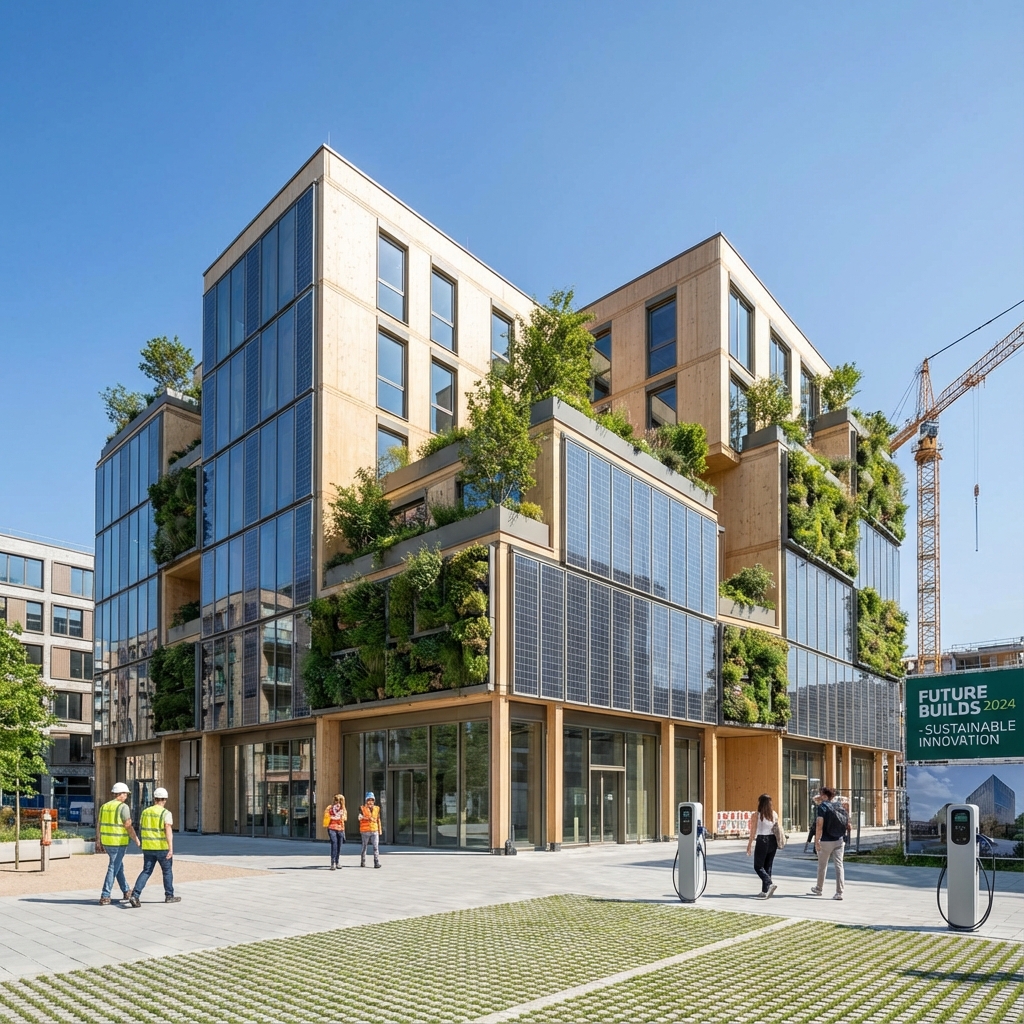
The construction materials industry is experiencing a revolutionary transformation in 2024. Driven by urgent sustainability goals, rapid technological advancements, and evolving market demands, the way we build is changing fundamentally.
1. Sustainable and Eco-Friendly Materials
Sustainability is no longer a buzzword; it's a requirement. Modern builders are prioritizing materials that reduce carbon footprints without compromising structural integrity.
- Green Concrete: Utilizing industrial waste like fly ash and slag to reduce cement consumption.
- Bio-Based Materials: Integrating hemp, bamboo, and mycelium into non-structural components.
- Recycled Steel: Offering the same tensile strength as virgin steel with a fraction of the energy cost.
2. Smart Materials with Embedded Technology
Imagine walls that can "heal" themselves or windows that adjust their transparency based on sunlight. Smart materials are moving from research labs to job sites.
"The integration of IoT sensors into concrete and steel allows for real-time structural health monitoring, drastically reducing maintenance costs over a building's lifecycle."
These innovations include self-healing concrete that uses bacteria to seal micro-cracks and phase-change materials that regulate indoor temperatures passively.
3. High-Performance Insulation Solutions
With rising energy costs, thermal efficiency is paramount. The latest generation of aerogel-based insulations provides superior thermal resistance in ultra-thin profiles, maximizing usable floor space while minimizing energy loss.
4. 3D-Printed Construction Materials
3D printing is democratizing design. From complex architectural elements to entire housing units, additive manufacturing reduces material waste by up to 60% and allows for geometries previously considered impossible or too costly to construct.
5. Carbon-Neutral and Carbon-Negative Materials
The ultimate goal is net-zero. We are seeing a surge in materials that actively sequester carbon dioxide during their production or lifecycle, turning buildings into carbon sinks rather than sources.
Conclusion
These trends represent a fundamental shift toward more responsible, efficient, and intelligent construction practices. At Starken Group, we are committed to providing you with these cutting-edge materials today, helping you build the sustainable landmarks of the future.